
My Hometown’s New Year Specialty
Every country, ethnic group, and locality has its own unique customs to welcome the moment of the New Year. On the occasion of Lunar New Year 2026, let us take a moment to listen to and share the distinctive New Year stories of the multicultural RT Holdings community.
“Bai Choi” Festival in Quang Tri Province
Mr. Nguyen Tho Tai – Media Specialist
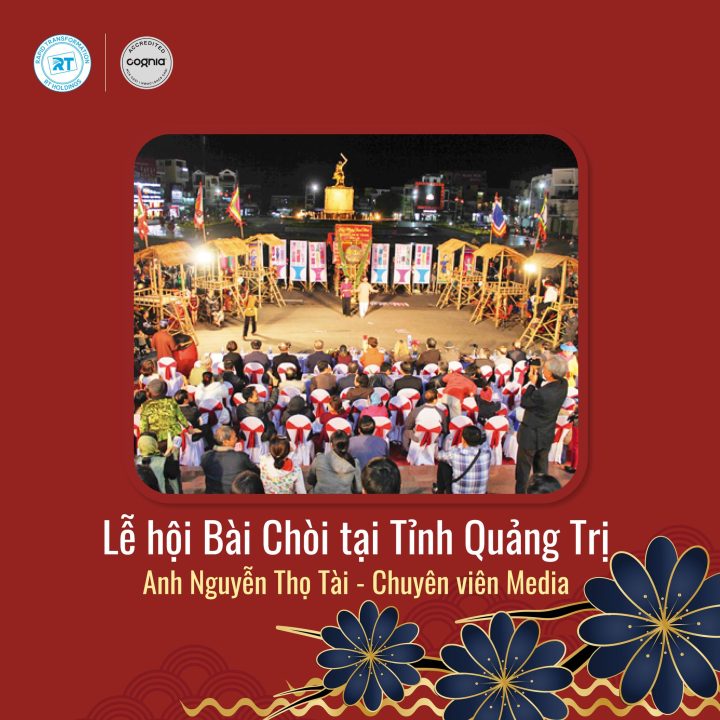
When recalling past Tet celebrations in Quảng Trị, many people still vividly remember the lively atmosphere of the Bài Chòi festival – a form of folk cultural activity deeply rooted in village life for generations.
Every Tet holiday, simple bamboo huts are set up in communal yards or open village spaces. Adults and children alike gather with excitement, waiting for the calls of the game to echo through the festive air. The “caller,” regarded as the soul of the game, draws cards while improvising witty folk verses, chants, and traditional rhymes. This spontaneous style of calling creates a unique charm, keeping listeners both eagerly expectant and delightfully amused.
What makes Bài Chòi in Quảng Trị truly special is not winning or losing, but the spirit of togetherness. The sounds of drums and wooden clappers blend with familiar calls, warming the Tet atmosphere. In those moments, age differences fade away as everyone shares the same joyful rhythm.
Despite periods of decline amid historical changes, Bài Chòi has never disappeared from the collective memory of Quảng Trị’s people. Today, as it is gradually revived at festivals, Bài Chòi stands not only as a form of folk entertainment but also as a way for younger generations to cherish, preserve, and carry forward traditional cultural values – embodying the optimism and heartfelt warmth of Central Vietnam.
The New Rice Festival of the M’Nông People in Lam Dong Province
Ms. K’Hong Sen – Music Teacher at Sydney School (SISS)
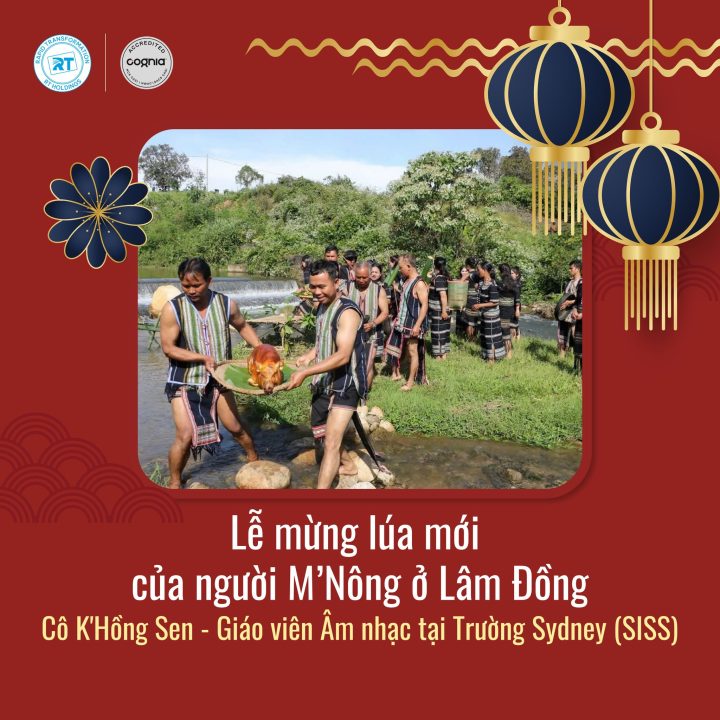
Amid the Central Highlands, after the harvest season, the M’Nong people of Lam Dong celebrate the New Rice Festival, an important ritual filled with joy for a successful harvest and deep gratitude toward nature and the deities. The festival usually takes place at the beginning of the year, as the dry season begins, providing an opportunity for the community to reunite and bond.
For us, it is not merely an agricultural festival, but a sacred moment for reconnecting with nature and our cultural roots. The M’Nong believe that every grain of rice has a soul, protected and nurtured by the Rice God (Yang Kuon). Therefore, after the harvest, the whole village offers thanks and prays for favorable weather, abundant crops, and a prosperous life.
Preparations begin well in advance, reflecting respect for the fruits of labor. Offerings include sticky rice made from newly harvested rice, a bundle of “mother rice” symbolizing fertility, roasted meat, jar wine, and a tall ceremonial pole that serves as a bridge between humans and the spiritual world. The sound of gongs is indispensable, as the M’Nong believe each gong houses a deity; when the gongs resonate, it is an invitation for the spirits to witness the villagers’ sincerity.
The rituals take place at homes and at the communal water source – the lifeline of the village. After the solemn ceremonies come the joyful celebration, where people eat together, drink jar wine, and perform xoang dances amid the resonant gong sounds day and night. The New Rice Festival thus becomes not only an expression of gratitude for the harvest, but also a meaningful way for M’Nông culture, beliefs, and community spirit to be passed down through generations.
Tet Cuisine of the Chinese Community in Saigon
Ms. Quach Thi Tam Nhu – Teacher at WASS Kindergarten
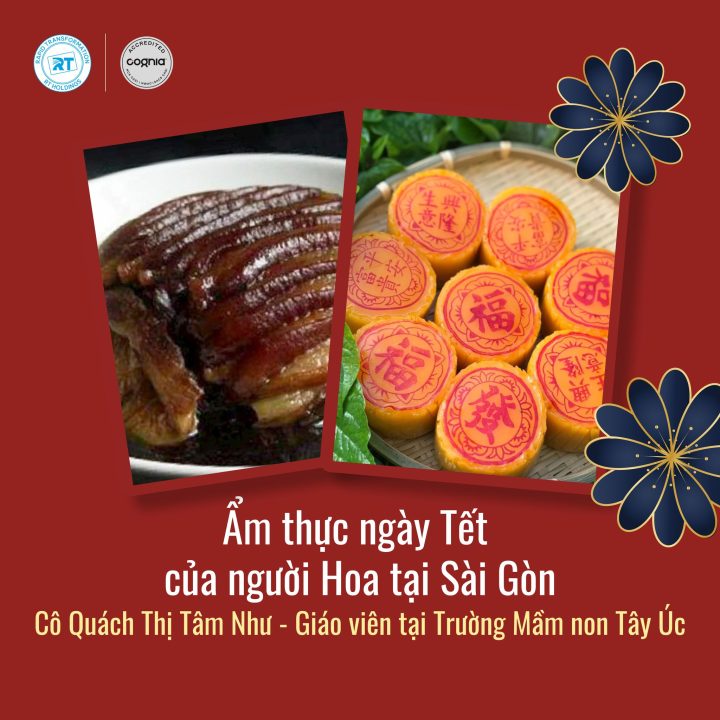
As a member of the Chinese community, I grew up with the flavors of traditional dishes that have accompanied my family and community for generations. In my childhood memories and during every Tet celebration, nian gao (To cake), khau nhuc, and radish cake were always present on the family table – not only as food, but as reminders of our roots, the meaning of togetherness, and hopes for the new year.
Nian gao marks the beginning of the Tet atmosphere in every Chinese household. When the cake is placed on the stove, its sweet aroma fills the home, signaling the arrival of a new year. Soft and sweet, nian gao symbolizes the wish for “year by year progress”. Eating it is not just about enjoying its sweetness, but about expressing hopes for academic success, smooth careers, and lasting family unity.
Khau nhuc best represents formality and reverence. Carefully prepared until tender and richly flavored, this dish is usually reserved for ancestor worship ceremonies and major Tet celebrations. Enjoying khâu nhục reflects abundance and gratitude toward ancestors who preserved family traditions. It is also a symbol of hospitality, as families prepare it only on special occasions to welcome relatives and honored guests.
Radish cake carries a meaning closely tied to daily life. In Chinese beliefs, radish symbolizes wealth and good fortune, which is why this dish is always present during the first days of the new year. As the family gathers around the table to enjoy its soft, savory taste, they pray for peace, prosperity, and harmony in the coming year.
To me, these dishes are more than food – they are the essence of Chinese identity, a bridge between past and present, and a source of pride and deep respect for my heritage.
The Beaded Bracelet (Nhong) Tradition of the K’Ho People in Lam Dong Province
Ms. K’Doanh – History and Geography Teacher at WASS
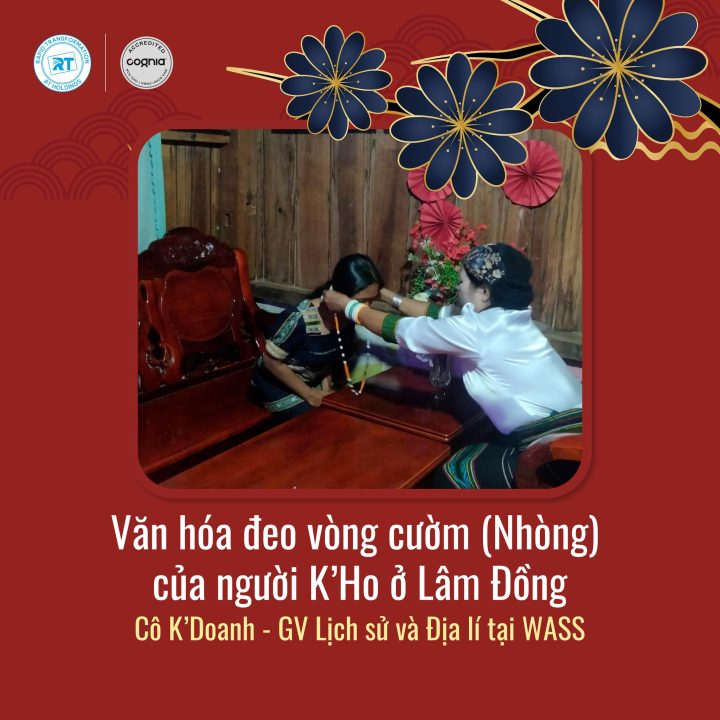
For the K’Ho people of Lam Dong, the New Year does not begin merely with time, but with rituals that carry wishes for peace and good fortune. Among them, the tradition of wearing beaded bracelets – known as “Nhong” – is a meaningful custom preserved as a way of expressing hopes for the year ahead.
During the early days of the new year, when children or honored guests visit, elders prepare colorful beaded bracelets and gently place them around the recipient’s neck or wrist, accompanied by wishes for health, peace, and success. For the K’Ho, this gesture symbolizes the giving of blessings, similar to the custom of giving lucky money, but expressed through an item deeply connected to their spiritual life.
Each “Nhong” bracelet is made from beads of different colors: red represents life and renewed energy, white symbolizes purity, while black is associated with Mother Earth and the protective power of the forest. By wearing the bracelet at the start of the year, the K’Ho believe these positive energies will stay with them throughout the year, warding off misfortune and bringing stability.
Quiet and unassuming, yet rich in meaning, the “Nhong” tradition reflects strong family ties and community spirit. Even in modern life, many K’Ho families continue this practice as a way to remind younger generations of their roots, cherish tradition, and step into the new year with simple but enduring faith.
Traditional Dishes Celebrating New Year in Mexico
Mr. Luis Estrada Jr. Jorge – Mathematics Teacher at PennSchool
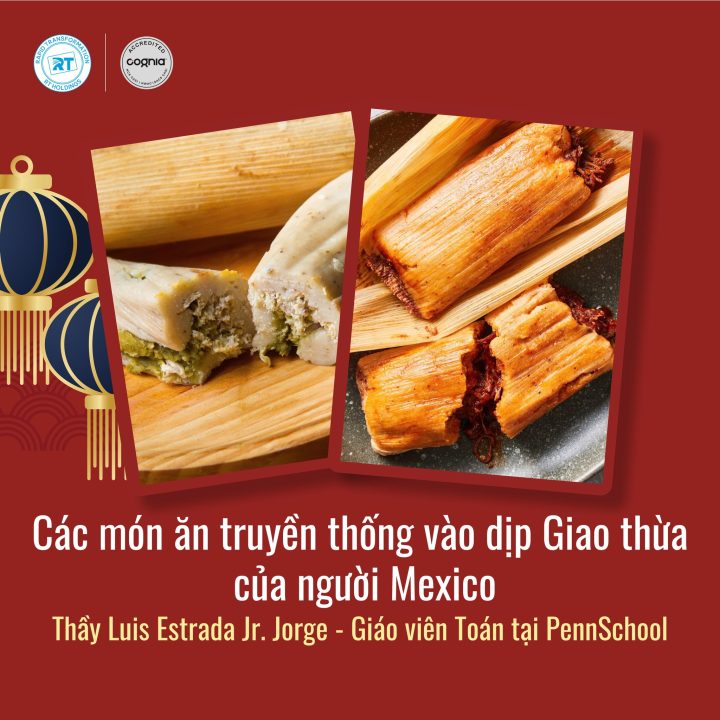
In Acapulco, Guerrero (Mexico), New Year’s has always been one of my favorite times of the year because it brings my family together to celebrate with food, traditions, and hope for what’s ahead.
One of the main dishes we always have is pozole, especially the green kind that Guerrero is known for. My family starts making it early in the day. Someone is always stirring the pot while others chop the toppings, lettuce, radishes, onions, and lime. When it’s finally ready, we all sit together and enjoy big, comforting bowls of pozole.
Along with pozole, we always make tamales, which are a must for special celebrations. Making tamales is a whole family activity. We spread the masa on the corn husks, add fillings like cheese with green peppers, pork in red sauce, or chicken in green sauce, and carefully wrap them up. Then we steam them until they’re soft and delicious. Sometimes we even make sweet tamales with cinnamon and raisins. I love how everyone helps, because it makes the celebration feel even more meaningful.
As the night goes on, we get ready for midnight. One tradition we follow is eating twelve grapes before midnight. With each grape, we make a wish for something we hope will happen in the new year, like good health, success, or happiness.
For me, New Year’s in Acapulco is all about family, tradition, and starting fresh. The food, the time spent with loved ones, and the simple customs make it a time I will always cherish.
Family and Festivity: A Filipino New Year
Ms. Sheryl R. Dacian – Teacher at PennSchool
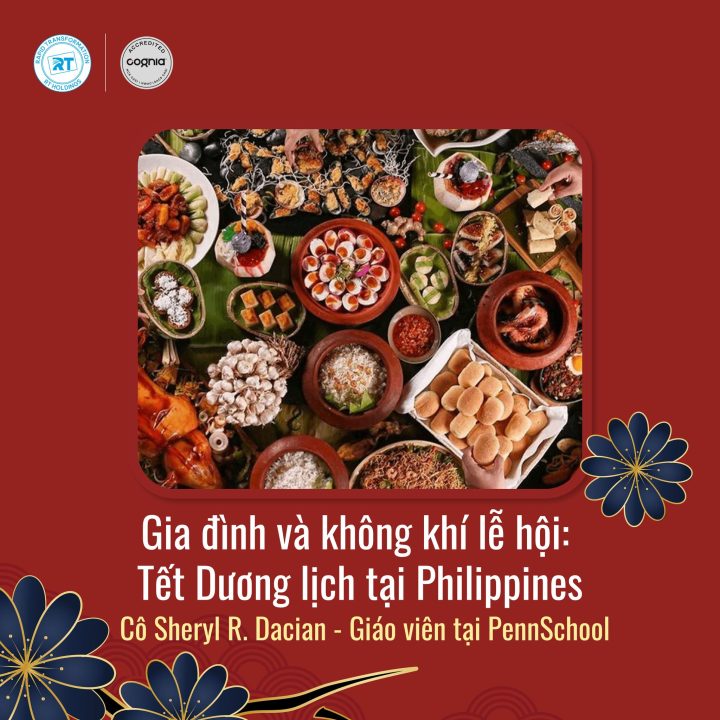
In my home country, the Philippines, the New Year is celebrated with an unmistakably festive and joyful spirit. Filipinos are very family-oriented, so New Year’s Eve is a time when relatives gather together.
The traditional New Year’s Eve dinner is called Media Noche, a Spanish term that means “midnight.” The dining table is filled with a wide variety of dishes and delicacies, many of which are chosen not only for taste but also for their symbolic meanings. Filipinos strongly observe customs and beliefs about what should be served to invite good luck, prosperity, and unity in the coming year.
Growing up, I remember that sticky rice delicacies, known as Kakanin, were always present on our table. These treats are made from glutinous rice, and we believe that serving sticky food helps keep the family close and bonded throughout the year. Another essential tradition is the display of 13 round fruits, symbolizing prosperity and abundance for each month (and more) of the year. These fruits are placed on a large plate filled with uncooked rice, which represents wealth and plenty. In recent years, some families have added rolled bills tied with red ribbons to the display for extra luck.
What we wear also matters. We are encouraged to wear clothes with polka dots, as the circular shapes resemble coins and are believed to attract financial good fortune.
When the clock finally strikes midnight, everyone jumps up and joyfully shouts “Happy New Year!” As children, we were told that jumping exactly at midnight would make us grow taller in the new year. We make as much noise as possible, light fireworks, turn on appliances, and greet neighbors and relatives with excitement and laughter.
After the noise dies down, we gather around the table to enjoy Media Noche together. It is also customary to invite neighbors and friends to join the meal, share stories, and celebrate as a community. These traditions are the memories I treasure most from growing up in the Philippines, where the New Year is always loud, joyous, and filled with togetherness.